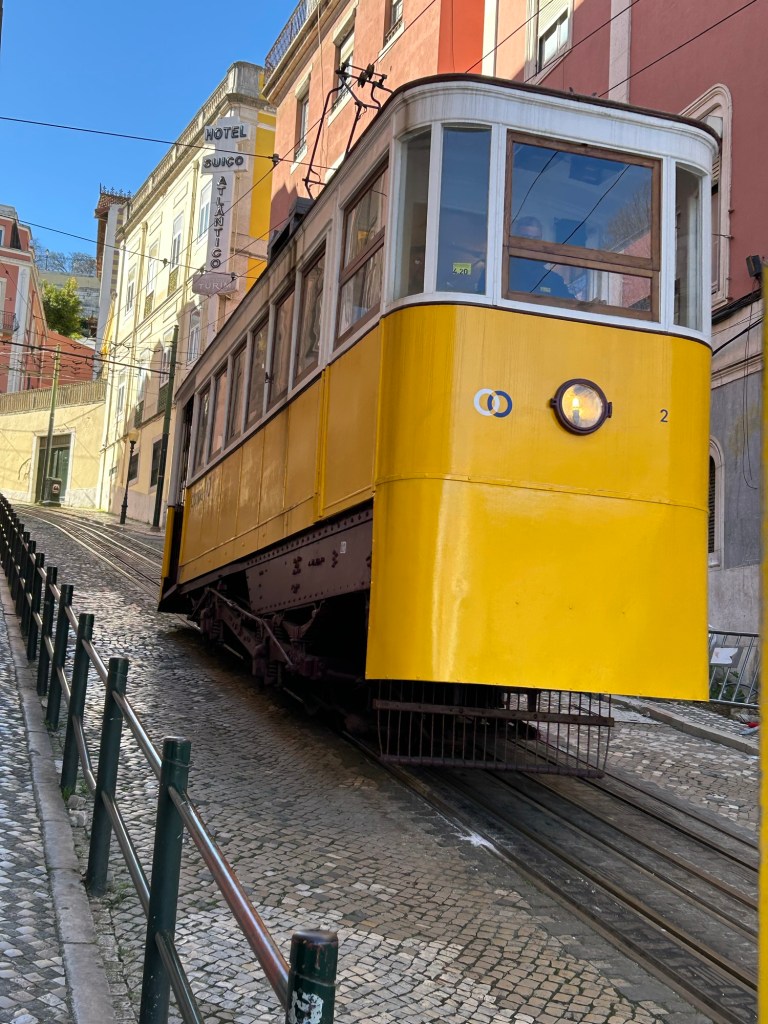
• 🇪🇸 Lisboa me maravilló. Esta ciudad ofrece una mezcla única de historia, cultura, modernidad y belleza natural que hace que cada rincón sea fascinante. Desde sus tranvías antiguos, algunos de ellos turísticos como el 28 o el 12, hasta otros que forman parte del sistema público, Lisboa tiene un encanto incomparable.

    Uno de los puntos más emblemáticos es el Monumento a los Descubrimientos, situado cerca del río, en la zona de Belém. Esta imponente estructura celebra a los navegantes portugueses que marcaron la historia de los descubrimientos en el siglo XV. Cerca de este monumento se encuentra la famosa Torre de Belém, un antiguo fuerte que, como guardián del río, protegía la entrada al puerto de Lisboa. Justo en el mismo barrio, el Monasterio de los Jerónimos es donde, según algunos, se originaron los famosos pasteles de Belém, ¡un deleite que no puedes dejar de probar!

    Lisboa es una ciudad a la que se puede llegar fácilmente en avión, en auto —como hice yo desde España— o en tren. Una vez allí, moverse por la ciudad es muy sencillo. Hay una gran red de transporte público, con metro, tranvías, ómnibus modernos, e incluso trenes regionales. Pero también es una ciudad que se puede recorrer perfectamente a pie. Yo usé el metro para llegar a un punto, luego tomé un solo tranvía para subir a la parte alta, caminé toda la ciudad y al final del día, cuando ya estaba cansada, tomé el tranvía para bajar. A pesar de las calles empedradas, Lisboa es una ciudad caminable, y eso hace que uno la viva con todos los sentidos.

    Además de los tranvías, Lisboa cuenta con varios ascensores históricos que conectan la parte baja con la alta. El más famoso es el Elevador de Santa Justa, una estructura de hierro que ofrece vistas panorámicas espectaculares. También están el Elevador da Bica, que sube por un pintoresco callejón empedrado; el Elevador da Glória, que lleva hasta el mirador de São Pedro de Alcântara; y el Elevador do Lavra, el más antiguo de todos. Son parte del sistema de transporte público y también una experiencia única.

    En la parte alta se encuentra el Castillo de San Jorge, desde donde se pueden admirar las mejores vistas de Lisboa. En sus alrededores, las calles empedradas del barrio de Alfama conservan ese aire antiguo, con casas coloridas, ropa tendida en los balcones, y tienditas donde se venden preciosos cuadritos de cerámica pintada a mano. En Lisboa, hasta los nombres de las calles están hechos de azulejos.

    En la parte baja, la ciudad impresiona por su grandiosidad: avenidas amplias, estatuas imponentes, y veredas de piedra blanca y negra con diseños geométricos que recuerdan mucho al paseo de Copacabana, en Río de Janeiro. Uno de los lugares más impresionantes es la Praça do Comércio, una enorme plaza abierta al río Tajo, rodeada de majestuosos edificios amarillos y un imponente arco de triunfo. Allí mismo hay una pequeña playa urbana y un muelle donde uno puede sentarse a ver el atardecer.

    Lisboa también tiene muchos miradores (miradouros) repartidos por toda la ciudad: el de Santa Lucía, el de Senhora do Monte o el de Graça ofrecen vistas inolvidables. Y si hablamos de ambiente, no se puede dejar de mencionar el alma musical de Lisboa: el Fado, que se puede escuchar especialmente en barrios como Alfama o Bairro Alto, en pequeños bares donde también se puede cenar.

    La oferta gastronómica es increíble. Desde los tradicionales restaurantes con música en vivo, hasta opciones vegetarianas, veganas o internacionales, como restaurantes mexicanos. Además, los cafés son parte importante de la cultura lisboeta. Desde principios del siglo XIX, el café se hizo parte del día a día, y algunos de los más emblemáticos son el Café A Brasileira, la Pastelaria Versailles y el Martinho da Arcada.

    Y por supuesto, no se puede ir uno de Lisboa sin probar los famosos pastéis de Belém, con su hojaldre crujiente y crema suave, vendidos desde 1837 en la pastelería del barrio del mismo nombre.

    Uno de los lugares que más me llamó la atención fue Pink Street, una calle que antiguamente albergaba locales nocturnos y bares tradicionales, y que hoy se ha reinventado como un punto de encuentro moderno, colorido y cultural, lleno de bares con encanto y arte urbano.

    Lisboa también es un excelente punto de partida para explorar los alrededores. A muy pocos kilómetros está Sintra, con su Palacio da Pena, un castillo de cuento rodeado de vegetación. Y también Cascais, un encantador destino de playa al que se puede llegar en tren o en auto por autopista.

    Lisboa no es solo una ciudad para ver, es una ciudad para sentir, caminar y vivir. Y te deja con unas ganas inmensas de volver.


                                    —————————————————————

    🇬🇧 Lisbon amazed me. This city offers a unique mix of history, culture, modernity, and natural beauty that makes every corner fascinating. From its old trams — some of them tourist attractions like number 28 or 12 — to others that are part of the public transport system, Lisbon has an incomparable charm.

    One of the most iconic landmarks is the Monument to the Discoveries, located near the river in the Belém area. This impressive structure celebrates the Portuguese navigators who shaped the Age of Discoveries in the 15th century. Nearby stands the famous Belém Tower, an old fortress that once protected the entrance to Lisbon’s port. In the same neighborhood, the Jerónimos Monastery is said by some to be where the famous Pastéis de Belém originated — a treat you simply must try!

    Lisbon is easy to reach by plane, car — as I did from Spain — or train. Once there, getting around the city is very simple. There’s an extensive public transport network, including metro, trams, modern buses, and even regional trains. But it’s also a city that can be explored perfectly on foot. I used the metro to get to one place, then took a single tram to go up to the upper part, walked all over the city, and at the end of the day, when I was tired, I took the tram to go back down. Despite the cobbled streets, Lisbon is a walkable city, and that makes you experience it with all your senses.

    In addition to the trams, Lisbon has several historic elevators connecting the lower and upper parts of the city. The most famous is the Elevador de Santa Justa, an iron structure offering spectacular panoramic views. There’s also the Elevador da Bica, which climbs a picturesque cobbled alley; the Elevador da Glória, which goes up to the São Pedro de Alcântara viewpoint; and the Elevador do Lavra, the oldest of them all. They’re part of the public transport system and a unique experience too.

    In the upper part, you’ll find São Jorge Castle, which offers the best views of Lisbon. Around it, the cobbled streets of the Alfama district still preserve an old-time feel, with colorful houses, laundry hanging on the balconies, and little shops selling beautiful hand-painted ceramic tiles. In Lisbon, even the street names are made of azulejos.

    In the lower part, the city impresses with its grandeur: wide avenues, majestic statues, and black-and-white stone sidewalks with geometric patterns reminiscent of the Copacabana promenade in Rio de Janeiro. One of the most striking places is Praça do Comércio, a huge square open to the Tagus River, surrounded by majestic yellow buildings and an imposing triumphal arch. Right there, there’s a small urban beach and a pier where you can sit and watch the sunset.

    Lisbon also has many viewpoints (miradouros) scattered throughout the city: Santa Luzia, Senhora do Monte, and Graça offer unforgettable views. And when it comes to atmosphere, you can’t forget Lisbon’s musical soul — Fado — which can be heard especially in neighborhoods like Alfama or Bairro Alto, in small bars where you can also have dinner.

    The food scene is amazing. From traditional restaurants with live music to vegetarian, vegan or international options, like Mexican places. Also, cafés are an important part of Lisbon’s culture. Since the early 19th century, coffee has been part of everyday life, and some of the most iconic cafés include A Brasileira, Pastelaria Versailles and Martinho da Arcada.

    And of course, you can’t leave Lisbon without trying the famous pastéis de Belém, with their crispy pastry and smooth custard cream, sold since 1837 in the bakery of the same name.

    One of the places that caught my attention the most was Pink Street, a street that once housed traditional bars and night venues, and has now reinvented itself as a modern, colorful, and cultural meeting point, full of charming bars and street art.

    Lisbon is also a great base to explore the surroundings. Just a few kilometers away is Sintra, with its Palácio da Pena — a fairytale-like castle surrounded by lush greenery. There’s also Cascais, a charming beach destination you can reach by train or highway.

    Lisbon is not just a city to see — it’s a city to feel, walk, and live. And it leaves you with an incredible desire to return.

                                           ⸻————————————

    🇩🇪 Lissabon hat mich verzaubert. Diese Stadt bietet eine einzigartige Mischung aus Geschichte, Kultur, Moderne und natürlicher Schönheit – jede Ecke ist faszinierend. Von den alten Straßenbahnen, einige davon touristisch wie die Linie 28 oder 12, bis hin zu jenen, die Teil des öffentlichen Verkehrssystems sind – Lissabon hat einen unvergleichlichen Charme.

    Eines der bekanntesten Wahrzeichen ist das Denkmal der Entdeckungen (Padrão dos Descobrimentos), das sich in der Nähe des Flusses im Stadtteil Belém befindet. Dieses imposante Bauwerk ehrt die portugiesischen Seefahrer, die im 15. Jahrhundert die Ära der Entdeckungen geprägt haben. Ganz in der Nähe steht der berühmte Torre de Belém, eine alte Festung, die einst den Eingang zum Hafen von Lissabon schützte. Ebenfalls im selben Viertel liegt das Hieronymitenkloster (Mosteiro dos Jerónimos), in dem – so sagt man – die berühmten Pastéis de Belém entstanden sind. Ein Genuss, den man sich nicht entgehen lassen sollte!

    Lissabon ist leicht zu erreichen – mit dem Flugzeug, dem Auto (so wie ich, von Spanien aus) oder mit dem Zug. Einmal angekommen, ist das Fortbewegen in der Stadt sehr einfach. Es gibt ein gut ausgebautes öffentliches Verkehrsnetz mit U-Bahn, Straßenbahnen, modernen Bussen und sogar Regionalzügen. Aber man kann die Stadt auch wunderbar zu Fuß erkunden. Ich habe die U-Bahn genommen, um zu einem Punkt zu kommen, dann eine einzige Straßenbahn, um in den oberen Teil der Stadt zu gelangen. Ich bin den ganzen Tag gelaufen und am Ende, als ich müde war, wieder mit der Bahn hinuntergefahren. Trotz der Kopfsteinpflaster ist Lissabon gut begehbar – man erlebt die Stadt mit allen Sinnen.

    Neben den Straßenbahnen gibt es in Lissabon auch mehrere historische Aufzüge, die die Unter- mit der Oberstadt verbinden. Der bekannteste ist der Elevador de Santa Justa – eine eiserne Konstruktion mit spektakulärer Aussicht. Es gibt auch den Elevador da Bica, der durch eine malerische gepflasterte Gasse führt, den Elevador da Glória, der zum Aussichtspunkt São Pedro de Alcântara fährt, und den Elevador do Lavra – der älteste von allen. Sie gehören zum öffentlichen Verkehrsnetz und bieten ein ganz besonderes Erlebnis.

    Im oberen Teil der Stadt liegt das Castelo de São Jorge, von wo aus man den besten Blick auf Lissabon hat. In der Umgebung bewahren die gepflasterten Gassen des Viertels Alfama ihren historischen Charme – mit bunten Häusern, Wäscheleinen auf den Balkonen und kleinen Läden, in denen handbemalte Keramik verkauft wird. In Lissabon bestehen sogar die Straßenschilder aus Azulejos.

    Die Unterstadt beeindruckt durch ihre Großzügigkeit: breite Alleen, imposante Statuen und schwarz-weiße Steinmuster auf den Gehwegen, die an die Promenade von Copacabana in Rio de Janeiro erinnern. Besonders eindrucksvoll ist der Praça do Comércio – ein riesiger Platz am Ufer des Tejo, umgeben von prächtigen gelben Gebäuden und einem imposanten Triumphbogen. Direkt daneben gibt es einen kleinen Stadtstrand und einen Steg, auf dem man den Sonnenuntergang genießen kann.

    In der ganzen Stadt sind Aussichtspunkte (Miradouros) verteilt: Santa Luzia, Senhora do Monte oder Graça bieten unvergessliche Ausblicke. Und wenn es um Stimmung geht, darf man das musikalische Herz Lissabons nicht vergessen: den Fado – den man besonders in den Vierteln Alfama oder Bairro Alto hören kann, in kleinen Bars, in denen man auch essen kann.

    Auch kulinarisch hat die Stadt viel zu bieten – von traditionellen Restaurants mit Live-Musik über vegetarische und vegane Optionen bis hin zu internationalen Lokalen wie mexikanischen Restaurants. Cafés sind ein wichtiger Teil der lokalen Kultur. Seit dem frühen 19. Jahrhundert ist Kaffee Teil des Alltags. Zu den bekanntesten Cafés gehören A Brasileira, Pastelaria Versailles und Martinho da Arcada.

    Und natürlich darf man Lissabon nicht verlassen, ohne die berühmten Pastéis de Belém zu probieren – mit ihrem knusprigen Blätterteig und der zarten Vanillecreme, die seit 1837 in der gleichnamigen Bäckerei im Stadtteil Belém verkauft werden.

    Eine Straße, die mich besonders beeindruckt hat, war Pink Street – eine Straße, die früher traditionelle Bars und Nachtlokale beherbergte und sich heute in einen modernen, farbenfrohen und kulturellen Treffpunkt verwandelt hat, voller gemütlicher Bars und Street Art.

    Lissabon ist auch ein idealer Ausgangspunkt für Ausflüge in die Umgebung. Nur wenige Kilometer entfernt liegt Sintra mit dem märchenhaften Palácio da Pena, umgeben von grüner Natur. Oder Cascais – ein charmantes Strandziel, das man bequem mit dem Zug oder dem Auto über die Autobahn erreicht.

    Lissabon ist nicht nur eine Stadt zum Anschauen – sie ist eine Stadt zum Spüren, Erleben und Durchstreifen. Und sie hinterlässt eine riesige Sehnsucht, zurückzukehren.
  • 🇪🇸 Mis mejores tips para recorrer Viena

    Viena es una ciudad elegante, cargada de historia, arte y cultura. En este post te comparto mis mejores tips para recorrerla y disfrutar de una experiencia inolvidable.

    El alma de Viena

    Comenzamos nuestra visita en el centro histórico, en la imponente Catedral de San Esteban (Stephansdom). Te recomiendo subir a su torre para tener una vista panorámica increíble de toda la ciudad.

    Luego paseamos por las calles del centro, donde hay tiendas de marcas internacionales y cafés tradicionales. Una excelente forma de moverse por Viena es el U-Bahn (metro), cómodo y eficiente.

    Nuestra siguiente parada es el majestuoso Palacio Hofburg, antigua residencia imperial. Allí visitamos la exposición de la vajilla de Sisi y conocemos la historia de esta fascinante emperatriz.

    Justo al lado se encuentra la prestigiosa Escuela Española de Equitación, donde se entrenan los caballos lipizanos. Si el horario lo permite, se puede asistir a un entrenamiento o a un espectáculo. ¡Una experiencia única!

    Después, visitamos el monasterio de los Capuchinos, donde descansan los emperadores austríacos.

    A media tarde, paramos en el icónico Café Sacher para disfrutar de un café con una porción de torta Sacher.

    El Palacio Schönbrunn y la Riesenrad

    El día comienza con una visita al impresionante Palacio Schönbrunn, la residencia de verano de los Habsburgo. Sus jardines y salones nos transportan a la época imperial. Se puede llegar en transporte público, a pie o en auto.

    Al atardecer, vamos al Prater, el parque de diversiones más antiguo de Viena. Allí nos subimos a la mítica Riesenrad, la noria gigante construida a fines del siglo XIX, desde donde se obtienen vistas mágicas de la ciudad iluminada.

     Arte, historia y fotos junto al Danubio

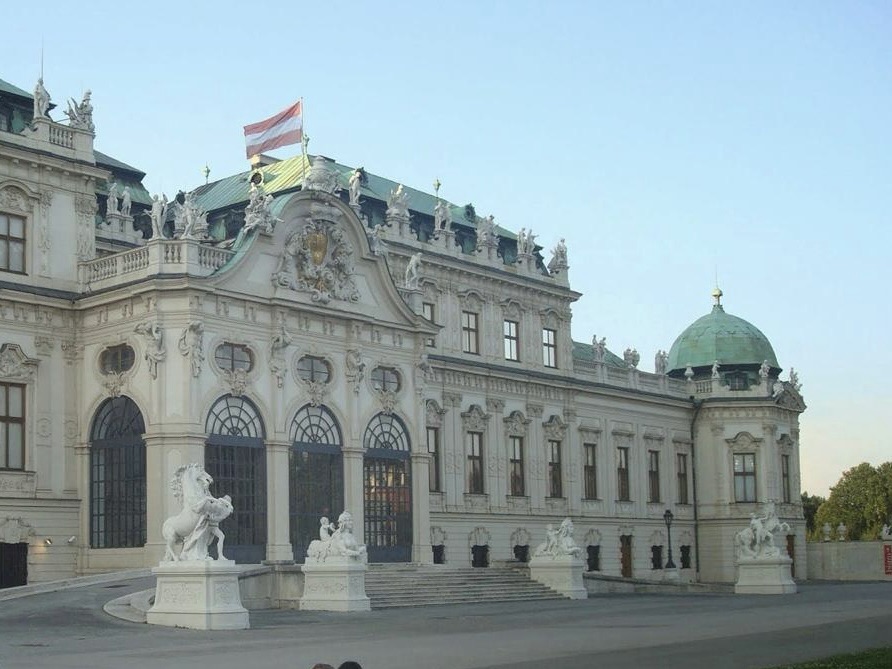
    Iniciamos el día con una visita al espléndido Palacio Belvedere, una joya barroca compuesta por el Belvedere Superior e Inferior. En su interior se encuentran algunas de las obras más famosas del arte austríaco, como El beso de Gustav Klimt.

    Luego tomamos un tranvía que recorre los principales monumentos y edificios históricos de la ciudad, incluyendo el Parlamento, el Ayuntamiento, la Universidad de Viena, el Burgtheater y finalizamos en la imponente Ópera Estatal.

    Para cerrar el día, nos dirigimos a la zona del río Danubio, donde podemos relajarnos y tomar fotos espectaculares, selfies y reels para Instagram, ya sea con la ciudad como fondo o con el río al atardecer. ¡Un final perfecto para tu viaje a Viena!

                                                      ⸻—————————————————

    🇬🇧 My Top Tips for Exploring Vienna

    Vienna is an elegant city full of history, art, and culture. In this post, I’ll share my best travel tips to explore it and enjoy an unforgettable experience.

    The Soul of Vienna

    We begin our trip in the historic center at the impressive St. Stephen’s Cathedral (Stephansdom). I highly recommend climbing the tower for a breathtaking panoramic view of the city.

    Then we stroll through the streets of the center, full of international shops and charming cafés. The U-Bahn (subway) is the best way to move around — fast and reliable.

    Next, we visit the majestic Hofburg Palace, the former imperial residence. There, we explore the Sisi silver collection and learn more about this fascinating empress.

    Right next door is the prestigious Spanish Riding School, where the famous Lipizzaner horses are trained. If the timing works out, you can watch a training session or a performance — truly unique!

    We continue with a visit to the Capuchin Crypt, the resting place of Austria’s emperors.

    In the afternoon, we stop at the iconic Café Sacher to enjoy a coffee and a slice of the original Sachertorte.

    Schönbrunn Palace and the Riesenrad

    We start the day with a visit to the stunning Schönbrunn Palace, the summer residence of the Habsburgs. Its magnificent gardens and halls transport you back to imperial times.

    In the evening, we head to the Prater, Vienna’s historic amusement park, and ride the legendary Riesenrad, the giant Ferris wheel from the late 19th century. The view of the illuminated city is magical.

     Art, history and Danube views

    We begin with a visit to the spectacular Belvedere Palace, a Baroque masterpiece made up of the Upper and Lower Belvedere. Inside you’ll find world-renowned art, including The Kiss by Gustav Klimt.

    Then we hop on a tram tour around Vienna’s most historic sites: passing by the Parliament, City Hall, University of Vienna, the Burgtheater, and ending at the grand Vienna State Opera.

    Finally, we head to the Danube River, the perfect spot to relax and take amazing photos, selfies, and Instagram reels, with the river or cityscape as your background. A beautiful way to wrap up your Vienna journey!

                                                  ⸻——————————————————

    🇩🇪 Meine besten Tipps für Wien

    Wien ist eine elegante Stadt voller Geschichte, Kunst und Kultur. In diesem Beitrag teile ich meine besten Tipps für eine unvergessliche Reise durch die Stadt.

    Das Zentrum Wiens

    Wir beginnen im historischen Zentrum bei der beeindruckenden Stephansdom. Der Aufstieg zur Turmspitze lohnt sich – der Blick über die Stadt ist fantastisch.

    Danach schlendern wir durch die Einkaufsstraßen mit internationalen Marken und gemütlichen Cafés. Mit der U-Bahn kommt man schnell und bequem durch die Stadt.

    Als Nächstes besuchen wir die prachtvolle Hofburg, einstige Residenz der Habsburger. Dort entdecken wir die Silberkammer von Sisi und erfahren mehr über das Leben der berühmten Kaiserin.

    Gleich daneben liegt die berühmte Spanische Hofreitschule, in der die Lipizzaner-Pferde trainiert werden. Wenn es der Zeitplan erlaubt, kann man ein Training oder eine Vorstellung erleben – ein unvergessliches Erlebnis!

    Dann geht es weiter zur Kapuzinergruft, der Ruhestätte der österreichischen Kaiserfamilie.

    Am Nachmittag genießen wir eine Pause im legendären Café Sacher bei einem Kaffee und einem Stück der berühmten Sachertorte.

    Schloss Schönbrunn und das Riesenrad

    Der Tag beginnt mit einem Besuch im prächtigen Schloss Schönbrunn, der Sommerresidenz der Habsburger. Die weitläufigen Gärten und historischen Räume lassen die Kaiserzeit wieder lebendig werden.

    Am Abend besuchen wir den Prater und fahren mit dem legendären Riesenrad, das Ende des 19. Jahrhunderts erbaut wurde. Der Blick auf das abendliche Wien ist einfach märchenhaft.

     Kunst, Geschichte und Fotos am Donauufer

    Wir starten den Tag mit dem Besuch des beeindruckenden Schloss Belvedere, einem barocken Juwel mit bedeutenden Kunstwerken – darunter Der Kuss von Gustav Klimt.

    Anschließend machen wir eine Fahrt mit der Straßenbahn zu den wichtigsten historischen Gebäuden Wiens: vorbei am Parlament, dem Rathaus, der Universität, dem Burgtheater bis zur Wiener Staatsoper.

    Zum Abschluss geht es ans Ufer der Donau – ein perfekter Ort, um sich zu entspannen und wunderschöne Fotos, Selfies oder Instagram-Reels mit Blick auf die Stadt oder den Sonnenuntergang am Fluss zu machen. Ein traumhafter Ausklang für deine Wien-Reise!

  • 🇪🇸 Un día entre colores alpinos y sabores austriacos

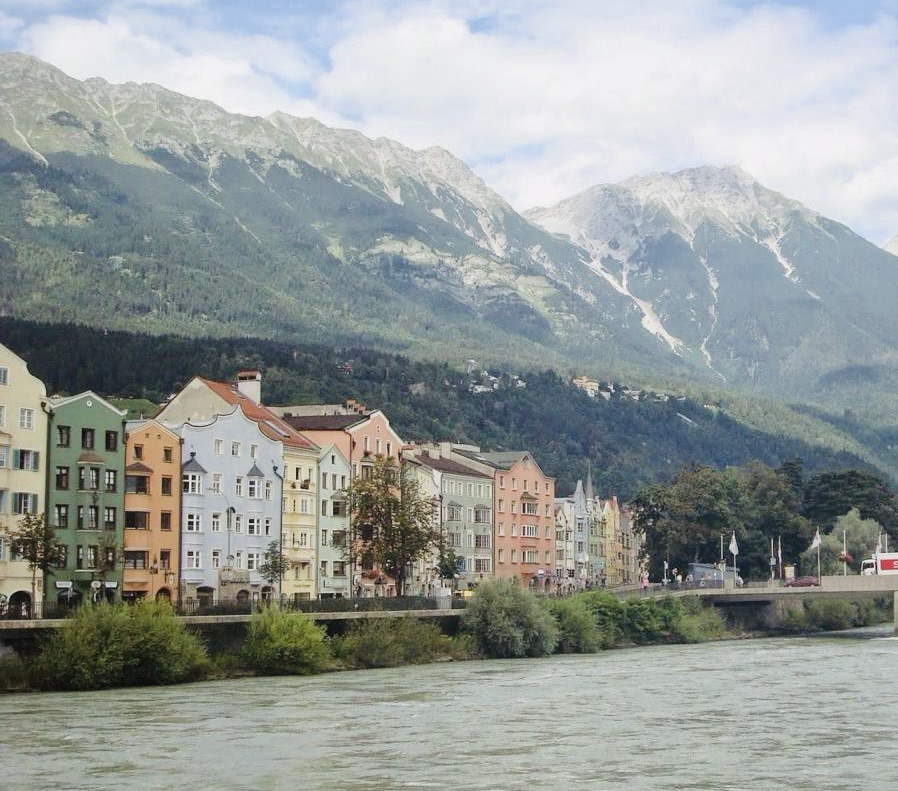
    Desde el primer momento, Innsbruck me pareció sacada de una postal. El río Inn atraviesa la ciudad con calma, bordeado por casas de colores que parecen salidas de un cuento, con el telón de fondo de los Alpes nevados. Ese contraste entre arquitectura pintoresca y naturaleza imponente te envuelve sin pedir permiso.

    El centro vibrante y peatonal es la Maria‑Theresien‑Straße, una avenida amplia donde conviven tiendas elegantes, confiterías tradicionales, el paso del tranvía y una energía constante. Allí se encuentra también la Annasäule, una columna majestuosa en medio de la calle, muy fotografiada, rodeada de terrazas, artistas callejeros y una atmósfera animada y amigable. Es el tipo de lugar donde te dan ganas de sentarte sin apuro y mirar la vida pasar.

    A pocas cuadras, el mercado al aire libre cerca del Marktplatz ofrece productos regionales, flores y artesanías. Vale la pena caminar por esa zona, perderse entre los puestos y probar alguna especialidad local.

    Innsbruck es famosa por los deportes de invierno, y lo mejor es que las montañas están prácticamente integradas a la ciudad. Podés subir fácilmente en tranvía o autobús hasta alguna estación de esquí cercana, como Nordkette, y pasar el día entre pistas, nieve y vistas panorámicas. Para algo diferente, hay toboganes alpinos, como el Alpine Coaster en Hoch-Imst, que baja por la montaña a toda velocidad y es tan divertido como único. También hay versiones más tranquilas y familiares en lugares como Muttereralm o Mieders.

    Moverse por la ciudad es muy sencillo: hay un sistema eficiente de tranvías y autobuses, y el centro histórico es perfectamente caminable. En pocos minutos podés ir de un extremo al otro, y casi todo lo interesante está a distancias que se recorren a pie sin problema. Si estás en auto, hay estacionamientos cerca del centro, pero no es necesario para disfrutar de la ciudad.

    La parte antigua es realmente encantadora. Las fachadas barrocas, las callecitas de piedra, los balcones con flores y los rincones tranquilos le dan a Innsbruck un aire acogedor, sin ser una ciudad moderna en exceso. Es fácil sentirse cómodo, como si el tiempo avanzara a otro ritmo.

    Una parte que disfruté muchísimo fue descubrir sus cafés y confiterías. Aunque el famoso Café Sacher ya no está, hay alternativas maravillosas. Me encantó el Café Katzung, con su terraza mirando al casco histórico, ideal para una pausa dulce. También descubrí algunas “Konditorei”, como se llaman las pastelerías aquí, donde probé una Sachertorte deliciosa y otros postres austriacos que todavía recuerdo.

    Algo que también me sorprendió fue la cercanía de Innsbruck a otras fronteras. Está muy cerca de Italia, especialmente del paso del Brennero, y eso se siente en el aire, en la gastronomía, en los rostros. De hecho, es común encontrar gente que habla alemán e italiano, lo cual le da a la ciudad un carácter multicultural muy especial.

    En resumen, si tenés un solo día en Innsbruck, podés caminar por la Maria‑Theresien‑Straße, tomarte algo frente a la Annasäule(Columna de Santa Ana) recorrer el mercado, subir a la montaña para esquiar o tirarte por un tobogán alpino, y terminar el día con una cena junto al río o una buena porción de pastel. Es una ciudad que mezcla naturaleza, historia, dulzura y aventura, todo en un formato compacto y encantador.

                                             _____________________________________

    🇬🇧 A Day of Alpine Colors and Austrian Flavors

    From the very first moment, Innsbruck felt like a postcard come to life. The calm Inn River runs through the city, lined with colorful houses that look straight out of a fairytale, all set against a backdrop of snowy Alpine peaks. That contrast between charming architecture and breathtaking nature wraps around you effortlessly.

    The lively pedestrian center is Maria‑Theresien‑Straße, a wide boulevard filled with stylish shops, traditional cafés, the occasional tram, and a vibrant local rhythm. Right in the middle stands the Annasäule, a tall and elegant column that’s a popular photo spot. Around it, street performers and café terraces create an atmosphere that’s both energetic and welcoming. It’s the kind of place where you just want to sit and soak it all in.

    Just a few blocks away, the open-air market near Marktplatz invites you to browse local produce, flowers, and handcrafted souvenirs. It’s worth taking your time to stroll around and sample something typical.

    Innsbruck is well known for winter sports, and the best part is how easily the mountains connect with the city. You can take a tram or bus straight to nearby ski areas like Nordkette, and spend the day skiing, admiring alpine views, or just enjoying the fresh air. If you’re in the mood for something different, you can try alpine tobogganing – the Alpine Coaster in Hoch-Imst is fast and thrilling, while other places like Muttereralm or Mieders offer gentler, family-friendly runs.

    Getting around is easy. The public transport system (trams and buses) is efficient, and the historic center is small enough to explore entirely on foot. Most of the highlights are within walking distance. If you’re driving, there are parking garages nearby, but you really don’t need a car to enjoy the city.

    The old town is truly charming. With its baroque facades, cobbled streets, floral balconies and quiet little corners, Innsbruck doesn’t feel overly modern—it feels warm and timeless. It’s the kind of place where you instantly feel at ease.

    One of my favorite parts was discovering the cafés and pastry shops. Although the famous Café Sacher is no longer open in Innsbruck, there are fantastic alternatives. I loved Café Katzung, with its cozy terrace and view of the historic district. There are also wonderful “Konditoreien”—traditional Austrian pastry shops—where you can try Sachertorte, apple strudel, and other irresistible desserts.

    What also surprised me is how close Innsbruck is to Italy, especially via the Brenner Pass. You can really feel the Italian influence—in the cuisine, the people, and even the language. Many locals speak both German and Italian, especially in tourist areas or younger generations. It gives the city a special multicultural feel.

    So, if you only have one day in Innsbruck, you could walk along Maria‑Theresien‑Straße, grab a coffee near the Annasäule, explore the market, head to the mountains for skiing or an alpine coaster ride, and end your day with dinner by the river and a slice of cake. It’s a place where nature, history, sweetness and adventure all come together in a compact and magical way.

                                               ⸻—————————————————

    🇩🇪 Ein Tag voller Alpenfarben und österreichischer Genüsse

    Schon beim ersten Anblick fühlte sich Innsbruck an wie eine lebendig gewordene Postkarte. Der ruhige Inn fließt durch die Stadt, gesäumt von bunten Häusern, die wie aus einem Märchen wirken – mit schneebedeckten Alpen im Hintergrund. Dieser Kontrast aus Architektur und Natur ist einfach zauberhaft.

    Das lebendige Fußgängerzentrum ist die Maria‑Theresien‑Straße, eine breite Allee mit stilvollen Geschäften, gemütlichen Cafés, durchfahrenden Straßenbahnen und einer ganz besonderen Stimmung. In ihrer Mitte steht die Annasäule, eine eindrucksvolle Marmorsäule und beliebter Fotospot. Rundherum begegnet man oft Straßenkünstlern und entspannten Caféterrassen – hier bleibt man gerne ein Weilchen sitzen.

    Nur wenige Schritte entfernt lädt der Wochenmarkt beim Marktplatz zum Bummeln ein – mit regionalen Produkten, Blumen und handgemachten Souvenirs. Es lohnt sich, dort einfach durchzuschlendern und vielleicht etwas Typisches zu probieren.

    Innsbruck ist bekannt für Wintersport – und das Beste ist, dass die Berge so nah sind. Du kannst mit der Straßenbahn oder dem Bus zu Skigebieten wie der Nordkette fahren und den Tag auf der Piste verbringen. Wenn du etwas Besonderes suchst, probier mal Alpenrodelbahnen: Der Alpine Coaster in Hoch-Imst ist rasant und spektakulär, während Bahnen in Muttereralm oder Mieders ideal für Familien und gemütlichere Fahrten sind.

    Die öffentlichen Verkehrsmittel (Straßenbahnen und Busse) funktionieren hervorragend. Die Altstadt ist überschaubar und lässt sich komplett zu Fuß erkunden – die meisten Sehenswürdigkeiten sind nur wenige Minuten voneinander entfernt. Wenn du mit dem Auto unterwegs bist, findest du Parkgaragen in Zentrumsnähe, brauchst das Auto aber eigentlich nicht.

    Die Altstadt ist wirklich charmant. Barocke Fassaden, Kopfsteinpflaster, Blumenbalkone und stille Gassen – modern ist Innsbruck nicht, aber genau das macht seinen Reiz aus. Man fühlt sich sofort willkommen.

    Besonders gut gefallen haben mir die Cafés und Konditoreien. Das bekannte Café Sacher gibt es in Innsbruck zwar nicht mehr, aber es gibt wunderbare Alternativen. Ich habe das Café Katzung sehr genossen – mit seiner Terrasse direkt im Zentrum. Außerdem gibt es traditionelle Konditoreien, in denen man Sachertorte, Apfelstrudel und andere österreichische Süßspeisen probieren kann.

    Was mich auch überrascht hat: Innsbruck liegt ganz nah an der italienischen Grenze, über den Brennerpass. Diese Nähe spürt man überall – im Essen, in der Atmosphäre und auch in der Sprache. Viele Menschen sprechen Deutsch und Italienisch, besonders in touristischen Bereichen. Das verleiht der Stadt ein angenehmes, multikulturelles Flair.

    Wenn du nur einen Tag in Innsbruck hast, dann schlendere durch die Maria‑Theresien‑Straße, trink einen Kaffee bei der Annasäule, besuche den Markt, fahr in die Berge zum Skifahren oder Rodeln – und beende den Tag mit einem Abendessen am Fluss und einem guten Stück Kuchen. Eine Stadt, in der Natur, Geschichte, Genuss und Abenteuer wunderbar zusammenfinden.

  • 🇪🇸  Madrid en tres días: Mis mejores tips para descubrir la capital española

    ¿Planeás una escapada a Madrid? Con solo tres días, podés disfrutar lo mejor de la capital española. Desde arte hasta gastronomía, ¡acá van mis mejores tips!

     Centro histórico, museos y postales clásicas

    Comenzá por la Puerta del Sol, el kilómetro cero del país y una selfie obligada. Desde ahí, caminá por la Calle Mayor hasta la Plaza Mayor. Luego llegá al impresionante Palacio Real (con visita a la armería real) y la Catedral de la Almudena.

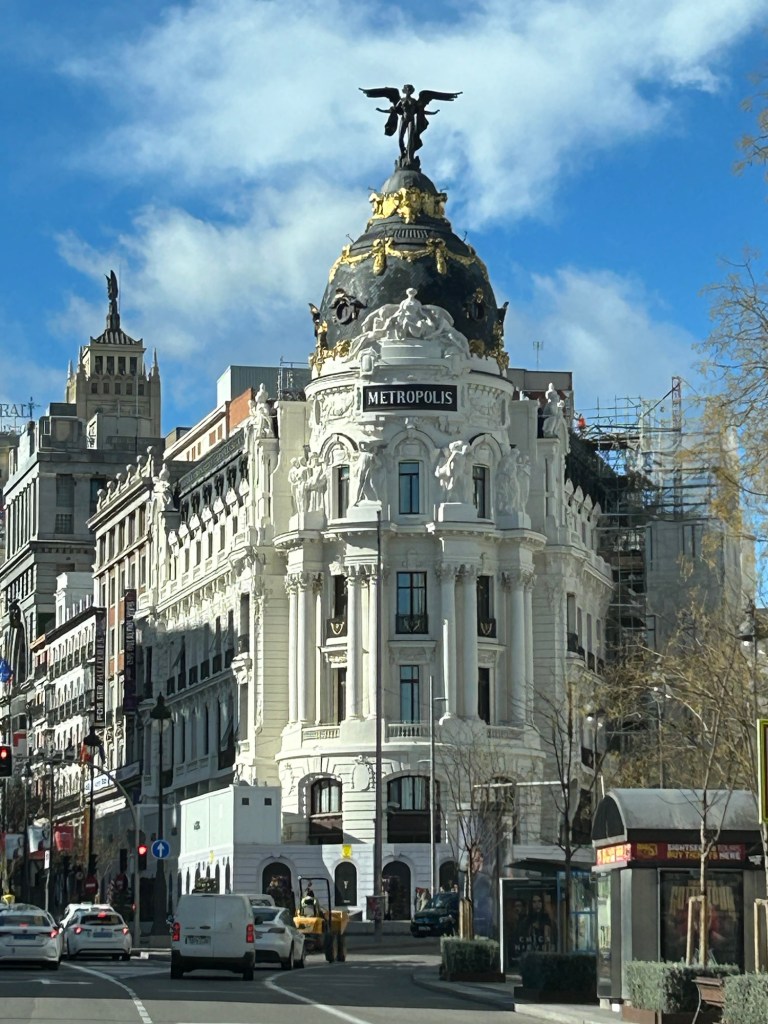
    Después, recorré la Gran Vía (parada en Callao, uno de los puntos más fotogénicos con vista a los cines y el cartel de Schweppes). Desde ahí, podés bajar por la Calle Alcalá hasta el Edificio Metrópolis, la Fuente de Cibeles (icónica para fans del Real Madrid), el Palacio de Cibeles (con mirador y terraza para tomar algo) y la majestuosa Puerta de Alcalá, perfecta para Instagram.

    Terminá el día en alguno de los grandes museos: Museo del Prado, Thyssen o Reina Sofía.

    Barrios con estilo, shopping y rooftops

    Explorá Chueca y Malasaña, ideales para caminar sin rumbo, con cafés, arte callejero y librerías vintage. Para compras, tenés desde Primark Gran Vía, H&M, Zara, Miniso y el siempre útil El Corte Inglés.

    ¿Querés lujo? Visitá la exclusiva Calle Serrano, en el elegante barrio de Salamanca, con tiendas como Loewe, Louis Vuitton, Gucci y más.

    Al atardecer, subí al mirador del Edificio Plaza España con restaurante en la cima. Otra opción es el rooftop del Círculo de Bellas Artes (en Calle Alcalá).

     Naturaleza, tapas y fútbol

    Paseá por el Parque del Retiro, alquilá una barca o buscá el Palacio de Cristal para una foto soñada. Comé en el Mercado de San Miguel, lleno de sabores locales. Visitá la Plaza de Toros de Las Ventas o hacé el tour en el Estadio Santiago Bernabéu.

    Para una última vista de postal, terminá el día en el Templo de Debod al atardecer.

    ¿Dónde comer?

    • Alta gama: Ramon Freixa Madrid, Casa Lucio, Botín.

    • Económicos: 100 Montaditos, Museo del Jamón, Casa Labra, El Tigre.

    Transporte y alojamiento

    • Metro de Madrid: rápido y eficiente.

    • Aeropuerto Barajas: a 30–40 min en metro o taxi del centro.

    • Dónde hospedarse: hoteles o Airbnbs en La Latina, Malasaña, Lavapiés, Salamanca o cerca de Gran Vía.

    • Free tours a pie: salen todos los días desde Puerta del Sol (¡propina voluntaria!).

                                           ⸻—————————————————-

    🇬🇧 Madrid in Three Days: My Best Tips for Exploring the Spanish Capital

    Planning a city break to Madrid? With just three days, you can discover its perfect mix of culture, shopping, gastronomy, and unforgettable photo spots.

     Historic center, museums & iconic corners

    Start at Puerta del Sol, the very center of Spain. Walk along Calle Mayor to reach Plaza Mayor. Then visit the stunning Royal Palace and Almudena Cathedral.

    From there, stroll up the vibrant Gran Vía and stop at Plaza de Callao, a must for photos with the classic Schweppes sign. Head down Calle Alcalá to the elegant Metropolis Building, Cibeles Fountain, and Palacio de Cibeles (visit the rooftop bar!). Finish at the famous Puerta de Alcalá—a top Instagram spot.

    Spend your afternoon at one of Madrid’s big three: the Prado Museum, Thyssen, or Reina Sofía.

     Trendy districts, shopping & rooftops

    Explore the artsy neighborhoods of Chueca and Malasaña, full of cafés and vintage shops. Go shopping at Primark Gran Vía, Zara, H&M, Miniso, or El Corte Inglés.

    For luxury, walk down Serrano Street in the posh Salamanca district, with brands like Loewe, Gucci, and Louis Vuitton.

    At sunset, enjoy views from the Plaza España rooftop or the Círculo de Bellas Artes rooftop terrace.

     Green spaces, tapas & sports

    Take a break at El Retiro Park, rent a boat or find the Crystal Palace for an iconic photo. Try delicious tapas at San Miguel Market. Visit the Las Ventas bullring or take a tour at the Santiago Bernabéu Stadium.

    For a magical sunset, head to the Temple of Debod—great for panoramic shots.

    Where to Eat

    • Fine dining: Ramon Freixa Madrid, Casa Lucio, Botín.

    • Budget-friendly: 100 Montaditos, Museo del Jamón, Casa Labra, El Tigre.

    Getting Around & Where to Stay

    • Metro de Madrid is fast, clean, and affordable.

    • Barajas Airport: 30–40 minutes from downtown.

    • Stay in: La Latina, Malasaña, Lavapiés, Salamanca, or near Gran Vía.

    • Free walking tours: leave from Puerta del Sol daily (tip-based).

                                          ⸻——————————————————————-

    🇩🇪 Madrid in drei Tagen: Meine besten Tipps für Spaniens Hauptstadt

    Drei Tage reichen aus, um Madrid von seiner besten Seite kennenzulernen – mit Kultur, Shopping, Essen und perfekten Fotospots.

     Altstadt, Museen & Foto-Hotspots

    Beginne an der Puerta del Sol, dem Zentrum Spaniens. Laufe über die Calle Mayor zur Plaza Mayor. Danach besuche den prächtigen Königspalast und die Kathedrale Almudena.

    Weiter geht’s zur Gran Vía, mit Fotostopp am Plaza de Callao – legendär dank des Schweppes-Leuchtschilds. Folge der Calle Alcalá zum Metropolis-Gebäude, zur Cibeles-Statue, dem Palacio de Cibeles (mit Dachterrasse) und zur berühmten Puerta de Alcalá – ein Muss für Instagram.

    Am Nachmittag: Kunst im Museo del Prado, Thyssen-Bornemisza oder im Museo Reina Sofía (Picasso!).

    Szeneviertel, Shopping & Ausblick

    Erkunde Chueca und Malasaña mit Cafés, Street-Art und kleinen Shops. Große Ketten wie Primark, Zara, H&M, Miniso oder El Corte Inglés sind überall präsent.

    Luxus findest du in der eleganten Calle Serrano im Barrio Salamanca, mit Shops wie Gucci, Loewe und Louis Vuitton.

    Abends lohnt sich der Aussichtspunkt Plaza España mit Restaurant oder die Dachterrasse vom Círculo de Bellas Artes.

    Park, Tapas & Fußball

    Spaziere durch den Retiro-Park, miete ein Boot oder mach ein Foto beim Palacio de Cristal. Danach Tapas im Mercado de San Miguel. Entdecke die Stierkampfarena Las Ventas oder das Bernabéu-Stadion.

    Der perfekte Sonnenuntergang wartet am Tempel von Debod.

    Essen & Trinken

    • Gehoben, Ramon Freixa Madrid, Casa Lucio, Botín.

    • Günstig: 100 Montaditos, Museo del Jamón, Casa Labra, El Tigre.

    Verkehr & Unterkunft

    • Metro Madrid: schnell, günstig, zuverlässig.

    • Flughafen Barajas: 30–40 Minuten mit Metro oder Taxi.

    • Empfohlene Viertel: La Latina, Malasaña, Lavapiés, Salamanca oder Nähe Gran Vía.

    • Kostenlose Stadttouren: täglich ab Puerta del Sol (Trinkgeld empfohlen).

  • 🇪🇸 Un día en Sevilla – Mis mejores tips de viaje

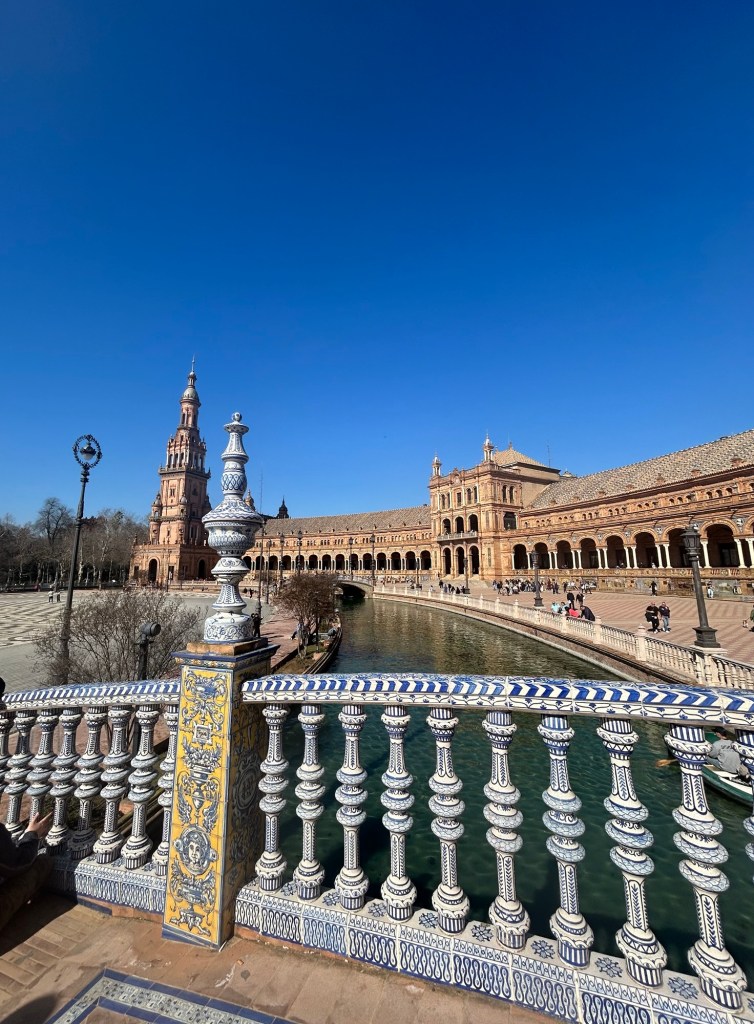
    Comienzo mi día con una visita al Parque de María Luisa y al Pabellón de España, una joya arquitectónica que quedó de la Exposición Iberoamericana de 1929. Es perfecto para pasear por la mañana y sacar fotos preciosas.

    Luego recomiendo visitar el centro histórico, caminar por las calles con patios andaluces, y usar el práctico transporte público como el tranvía.

    No puede faltar la Catedral de Sevilla y la subida a la Giralda, desde donde se tienen vistas increíbles de toda la ciudad. Después, una visita a los Reales Alcázares y sus jardines es obligatoria.

    Por la tarde, se puede caminar a orillas del río y cruzar al barrio de Triana. Recomiendo visitar el moderno monumento conocido como Las Setas de Sevilla, que se ilumina de noche.

    Dónde comer: Tapas económicas en El Rinconcillo o Casa Morales. Restaurantes más caros: Abades Triana o Restaurante Egaña-Oriza.

                                             ⸻———————————————————

    🇬🇧 One Day in Seville – My Best Travel Tips

    I start the day with a visit to María Luisa Park and the Spain Pavilion, a beautiful building from the 1929 Ibero-American Exhibition. It’s a perfect place for a morning walk and some beautiful photos.

    Then I suggest heading to the historic center, wandering through Andalusian-style streets and using public transport like the tram.

    Don’t miss the Seville Cathedral and the climb to the top of La Giralda, which offers stunning views. Next, visit the Royal Alcázar with its lush gardens and tiled rooms.

    In the afternoon, walk along the river and cross into the charming Triana district. A must-see is the modern structure called Las Setas de Sevilla, beautifully lit at night.

    Where to eat: Cheap tapas at El Rinconcillo or Casa Morales. For upscale dining: Abades Triana or Restaurante Egaña-Oriza.

                                               ⸻——————————————————

    🇩🇪 Ein Tag in Sevilla – Meine besten Reisetipps

    Ich beginne meinen Tag mit einem Spaziergang durch den Parque de María Luisa und einem Besuch des Spanischen Pavillons, der von der Ibero-Amerikanischen Ausstellung 1929 stammt. Perfekt für einen Morgenspaziergang und schöne Fotos.

    Danach empfehle ich einen Bummel durch das historische Zentrum, vorbei an andalusischen Innenhöfen. Öffentliche Verkehrsmittel wie die Straßenbahn sind sehr praktisch.

    Ein Muss ist die Kathedrale von Sevilla und der Aufstieg auf die Giralda, mit einem tollen Blick über die Stadt. Danach lohnt sich ein Besuch des Alcázar-Palasts mit seinen wunderschönen Gärten.

    Am Nachmittag lohnt sich ein Spaziergang am Flussufer und ein Besuch im Stadtteil Triana. Am Abend solltest du unbedingt die moderne Struktur Las Setas de Sevilla besuchen, die nachts beleuchtet wird.

    Wo essen: Günstige Tapas bei El Rinconcillo oder Casa Morales. Für gehobene Küche: Abades Triana oder Restaurante Egaña-Oriza.

  • 🇪🇸 Mis días en Granada 

    Pasé dos días inolvidables en Granada, explorando cada rincón con asombro. Me alojé en el centro, con alojamientos para todos los bolsillos: desde hoteles de cuatro estrellas hasta opciones más económicas tipo Airbnb. 

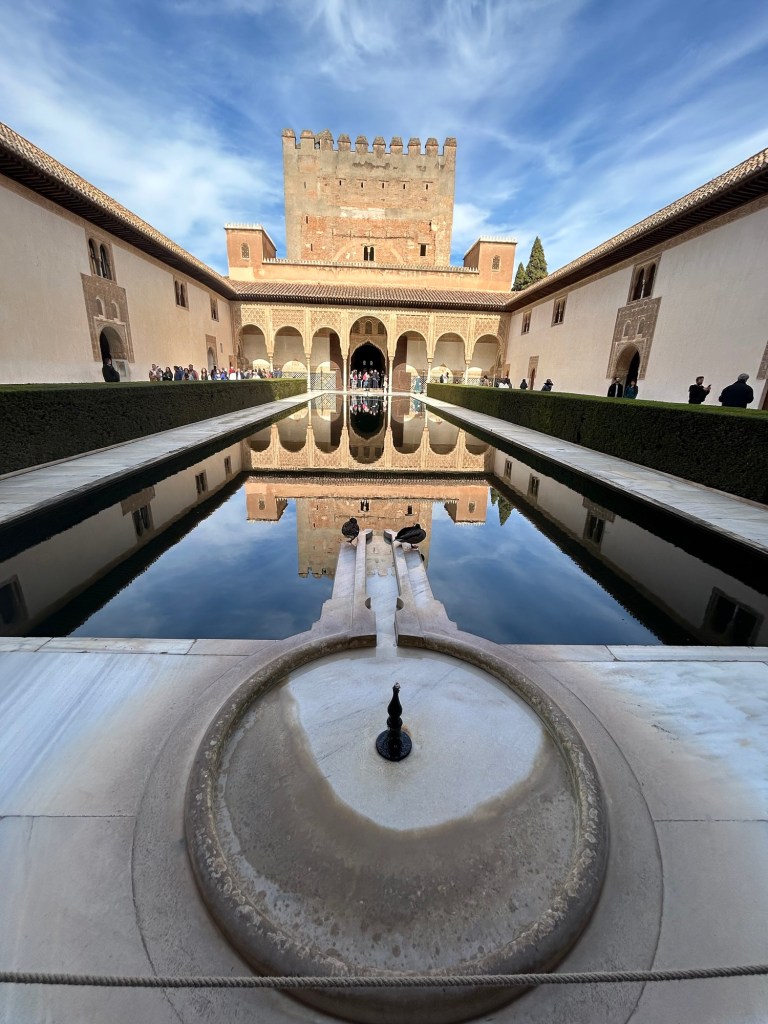
    El primer día visité la Alhambra, abierta desde las 8:30 hs.  El lugar más impactante fue el Patio de los Leones, con su fuente central y los doce leones de mármol; también recorrí patios con estanques y salas decoradas con mucho detalle. Los jardines del Generalife estaban impecables, y con el wifi bajé una guía al celular que lo explica todo. Al salir, encontré muchas tiendas con estilo marroquí, llenas de pulseras, remeras y souvenirs. Después caminé por el Albaicín, el barrio gitano, con sus callejones angostos y casas blancas; hay tours guiados, pero yo lo hice por mi cuenta. También visité la Catedral y la zona de la Alcaicería, ideal para comprar cosas típicas. Por la noche, Granada se llena de vida con tapas, música y flamenco.

                                          ⸻———————————————————

    🇬🇧 

    I spent two unforgettable days in Granada, exploring every corner with amazement. I stayed in the city center, where there are places for all budgets—from four-star hotels to more affordable options like Airbnb. 

    On the first day, I visited the Alhambra, which opens at 8:30 am.  The most impressive part was the Patio of the Lions, with its central fountain and twelve marble lions. I also walked through patios with reflective pools and rooms full of detailed decorations. The Generalife gardens were in perfect condition, and thanks to the free wifi, I downloaded a guide to my phone. On the way out, I found shops with a Moroccan feel, full of bracelets, T-shirts and souvenirs. Later, I walked through the Albaicín, the traditional gypsy quarter with narrow alleys and white houses. There are guided tours available, though I explored it on my own. I also visited the Cathedral and the Alcaicería area, great for local shopping. At night, Granada comes alive with tapas, music and flamenco.

                                             ⸻———————————————————

    🇩🇪 

    Ich verbrachte zwei unvergessliche Tage in Granada und entdeckte jeden Winkel mit Staunen. Ich übernachtete im Stadtzentrum, wo es Unterkünfte für jedes Budget gibt – von Vier-Sterne-Hotels bis hin zu günstigeren Optionen wie Airbnb. 

    Am ersten Tag besuchte ich die Alhambra, die ab 8:30 Uhr geöffnet ist. Am beeindruckendsten war der Löwenhof mit seinem Brunnen und den zwölf Marmorlöwen. Ich spazierte auch durch Innenhöfe mit Wasserbecken und reich verzierten Räumen. Die Gärten des Generalife waren perfekt gepflegt, und dank WLAN konnte ich mir eine App mit Erklärungen aufs Handy laden. Am Ausgang entdeckte ich viele Läden im marokkanischen Stil mit Armbändern, T-Shirts und Souvenirs. Danach erkundete ich das Viertel Albaicín mit seinen engen Gassen und weißen Häusern – ein traditionelles Zigeunerviertel. Auch die Kathedrale und die Gegend rund um die Alcaicería, ideal zum Einkaufen typischer Produkte, lohnen sich. Abends lebt Granada mit Tapas, Musik und Flamenco richtig auf.

  • 🇪🇸  Mi viaje a Gibraltar: entre monos, historia y un pedacito de Londres bajo el sol andaluz

    Gibraltar fue una de esas aventuras inesperadas que terminan siendo inolvidables. Estaba viajando por el sur de España y decidí hacer una escapada de un día desde La Línea de la Concepción. Me alojé ahí porque es más económico que del lado británico, y además queda tan cerca que podés cruzar la frontera caminando. Literalmente, te bajás del hotel, caminás unos minutos… ¡y ya estás en otro país! Así empezó mi día en Gibraltar.

    Cruzar la pista del aeropuerto: una experiencia surreal

    Una de las cosas más locas que viví fue cruzar la pista del aeropuerto a pie. Sí, leíste bien. Para entrar a Gibraltar desde España, tenés que cruzar la pista de aterrizaje del aeropuerto. Cuando llega o sale un avión, cortan el paso como si fuera un cruce de tren. Yo justo tuve que esperar unos minutos mientras aterrizaba un vuelo de British Airways. Ver un avión pasar tan cerca fue increíble. Y sí, por supuesto me saqué fotos ahí, ¡no podía dejar pasar el momento!

    Un lugar chiquito pero lleno de contrastes

    Gibraltar es pequeño, pero lleno de vida. Me llamó mucho la atención cómo se mezcla lo español con lo británico. Desde las cabinas telefónicas rojas, hasta los carteles en inglés y los negocios como Marks & Spencer o Boots, todo te recuerda que estás en territorio británico. Pero la gente habla en español y en inglés con total naturalidad. Es un cruce de culturas, acentos y costumbres que se siente muy auténtico.

    Subí al Peñón en teleférico… y conocí a los monos

    Una de mis partes favoritas del viaje fue subir al famoso Peñón de Gibraltar. Tomé el teleférico desde cerca de Main Street, que funciona desde las 9:30 de la mañana hasta las 17:15 o 19:15, según la temporada. Te recomiendo chequear antes porque a veces está cerrado por mantenimiento.

    Arriba, la vista es espectacular. Se ve toda la ciudad, el mar, el puerto… ¡y hasta África si el día está claro! Pero lo mejor fue encontrarme con los famosos macacos de Berbería. Están sueltos, viven ahí libremente y se pasean entre los turistas como si nada. Me crucé con varios y saqué un montón de fotos. Eso sí, ojo con las mochilas, porque son curiosos y a veces se animan a revisar bolsos.

    Tip viajero: tour personalizado o en combi

    Yo hice un tour en combi, que me permitió ver varias partes del Peñón sin cansarme tanto. Hay varias empresas que lo ofrecen, como Rock Tours Gibraltar o MH Bland. También hay tours privados si querés algo más personalizado. Algunos incluyen paradas en las cuevas de San Miguel, los túneles históricos, el Skywalk (una pasarela de vidrio con vistas espectaculares) y el Windsor Suspension Bridge, un puente colgante que da un poco de vértigo pero vale cada paso.

    Un descanso entre flores: los Jardines Botánicos

    Cerca de la estación del teleférico encontré un lugar que no esperaba disfrutar tanto: los Jardines Botánicos Alameda. Me encantó caminar por sus senderos llenos de plantas exóticas, fuentes, estatuas y sombra (¡muy importante en verano!). Ahí también se organizan eventos y hasta bodas al aire libre. Me senté un rato en un banco, saqué algunas fotos y aproveché para descansar entre tanta caminata.

    Catalan Bay y Europa Point: los rincones que más me gustaron

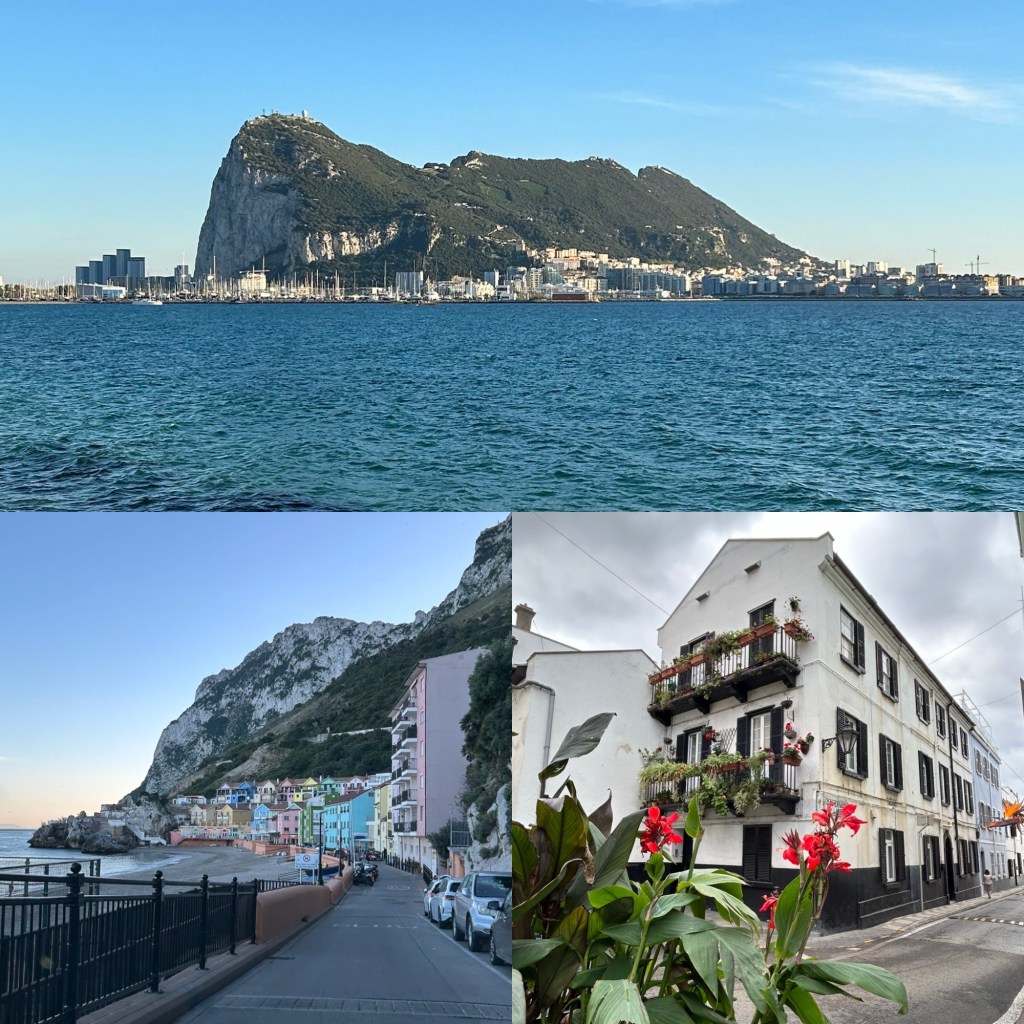
    Otro lugar que te recomiendo es Catalan Bay, un pueblito de pescadores con casas de colores frente al mar. Fui al atardecer y me encontré con una vista de postal. El mar, el sol bajando, y del otro lado… África. Es uno de esos momentos que te quedás en silencio y simplemente disfrutás.

    Más al sur está Europa Point, el punto más austral de Gibraltar. Ahí está el faro y otro lugar perfecto para una selfie o una foto con tu pareja. Me senté un rato a contemplar el paisaje y me sentí en paz total.

    ¿Dónde comer? Mis paradas favoritas

    Después de tanto andar, necesitaba un buen café y algo rico. Fui a Sacarello’s, un café histórico en Irish Town, y probé su pastel de zanahoria. ¡Una delicia! Más tarde, almorcé en Little Bay, que tiene una cocina india-mediterránea muy sabrosa y una decoración encantadora. Si vas a Catalan Bay, te recomiendo quedarte a comer mariscos en algún restaurante frente al mar. Hay varios pequeños, todos con vista y buena onda.

    Consejos útiles para tu visita

    • Llevá pasaporte, incluso si estás en España, ya que hay control fronterizo.

    • Cruzá a pie si querés evitar el tráfico. Es fácil y rápido.

    • Si vas a manejar, tené cuidado con las calles angostas. Mejor si estás acostumbrado o contratás un tour.

    • La moneda es la libra gibraltareña, pero en muchos lugares aceptan euros (aunque el cambio no siempre conviene).

    • Las aerolíneas que vuelan a Gibraltar son British Airways y easyJet.

    Para cerrar…

    Gibraltar me sorprendió por su mezcla de culturas, su paisaje, sus monos simpáticos (¡y algo traviesos!), sus vistas alucinantes y sus rincones tranquilos. Es un destino que vale la pena, especialmente si estás de paso por el sur de España.

    ¿Lo mejor? Pude vivir todo esto en un solo día, sacar mil fotos y llevarme un recuerdo inolvidable.

                                                 ⸻———————————————————

    🇬🇧 My Trip to Gibraltar: Monkeys, History, and a Slice of London in the Andalusian Sun

    Gibraltar was one of those unexpected adventures that turn into unforgettable memories. I was traveling through southern Spain and decided to take a day trip from La Línea de la Concepción. I stayed there because it’s more affordable than the British side, and it’s so close you can literally walk across the border. Just a few minutes walking… and you’re in a different country! That’s how my day in Gibraltar began.

    Crossing the airport runway: a surreal experience

    One of the craziest things I’ve experienced was walking across the airport runway. Yes, really. To enter Gibraltar from Spain, you have to cross the runway. When a plane is landing or taking off, the road closes like a railway crossing. I had to wait a few minutes while a British Airways flight landed. Seeing a plane that close was amazing. And of course, I took photos!

    A small place full of contrasts

    Gibraltar is small but full of life. I was struck by how Spanish and British culture blend. Red phone boxes, English signs, shops like Marks & Spencer or Boots—it all feels very British. But everyone speaks both Spanish and English. It’s a cultural mix that feels very real.

    Cable car ride to the Rock… and meeting the monkeys

    One of my favorite parts was taking the cable car up the famous Rock of Gibraltar. It runs from around 9:30 am until 5:15 or 7:15 pm depending on the season—check before you go, as it sometimes closes for maintenance.

    From the top, the views are breathtaking. You can see the city, the sea, the port… and on a clear day, even Africa! But the best part? Meeting the Barbary macaques. They roam freely and walk among tourists as if they own the place. I saw several, took tons of pictures, and had to keep an eye on my backpack—they’re curious little creatures.

    Travel tip: private or shared tour

    I did a shared minibus tour, which made it easier to see different parts of the Rock without walking too much. Companies like Rock Tours Gibraltar or MH Bland offer them, and you can also book private tours. They often include visits to St. Michael’s Cave, the historical tunnels, the glass Skywalk, and the Windsor Suspension Bridge—which is a bit scary but totally worth it.

    Botanic gardens: a peaceful break

    Near the cable car station, I found the Alameda Botanic Gardens. I hadn’t planned on visiting, but I loved it. Shady paths, fountains, exotic plants and statues. A lovely place to rest your feet and breathe. They also host events and open-air weddings there. I sat on a bench, enjoyed the breeze, and took some nice photos.

    Catalan Bay & Europa Point: my favorite spots

    Don’t miss Catalan Bay, a small fishing village with colorful houses facing the sea. I went at sunset, and the view was postcard-perfect. The sea, the fading sun, and Africa across the horizon. Pure magic.

    Further south is Europa Point, Gibraltar’s southernmost tip. There’s a lighthouse and it’s a great spot for selfies or a romantic photo. I sat there for a while, just enjoying the peaceful vibe.

    Where to eat: my favorite stops

    After all that walking, I needed something sweet. I stopped at Sacarello’s, a historic café in Irish Town, and had a slice of carrot cake—so good! Later I had lunch at Little Bay, which serves Indian-Mediterranean fusion in a beautiful setting. If you’re in Catalan Bay, stay for seafood at one of the beachfront places. Great views and good vibes.

    Useful tips for your visit

    • Bring your passport, even if you’re coming from Spain. There’s a border check.

    • Walk across the border to avoid traffic—it’s easy and quick.

    • Driving can be tricky—narrow roads! If in doubt, take a tour.

    • Currency is the Gibraltar Pound, but euros are often accepted (not always at the best rate).

    • Flights to Gibraltar: British Airways and easyJet.

    To wrap up…

    Gibraltar surprised me. The culture mix, the scenery, the cheeky monkeys, the views. If you’re traveling in southern Spain, it’s totally worth a visit.

    The best part? I saw all this in just one day and left with amazing memories and photos.

                                               ⸻——————————————————————

    🇩🇪 Meine Reise nach Gibraltar: Affen, Geschichte und ein Hauch von London in der andalusischen Sonne

    Gibraltar war eines dieser spontanen Abenteuer, die man nie vergisst. Ich war im Süden Spaniens unterwegs und beschloss, einen Tagesausflug von La Línea de la Concepción aus zu machen. Dort übernachtete ich, weil es günstiger ist als auf der britischen Seite – und so nah, dass man einfach zu Fuß über die Grenze gehen kann. Nur ein paar Minuten zu Fuß… und man ist in einem anderen Land! So begann mein Tag in Gibraltar.

    Die Landebahn überqueren – surreal!

    Eines der verrücktesten Erlebnisse war, die Landebahn des Flughafens zu Fuß zu überqueren. Ja, wirklich! Um von Spanien nach Gibraltar zu kommen, muss man direkt über die Start- und Landebahn gehen. Wenn ein Flugzeug startet oder landet, wird die Straße wie bei einem Bahnübergang gesperrt. Ich musste ein paar Minuten warten, bis ein British-Airways-Flugzeug gelandet war. Es war beeindruckend – und natürlich habe ich Fotos gemacht!

    Ein kleiner Ort voller Kontraste

    Gibraltar ist winzig, aber voller Leben. Es ist faszinierend, wie sich britische und spanische Einflüsse vermischen. Rote Telefonzellen, englische Straßenschilder, Shops wie Marks & Spencer – alles wirkt sehr britisch. Gleichzeitig sprechen die Menschen fließend Spanisch und Englisch. Eine spannende Mischung!

    Mit der Seilbahn auf den Felsen – und Affen getroffen

    Ein Highlight war für mich die Fahrt mit der Seilbahn zum berühmten Felsen von Gibraltar. Sie fährt ab etwa 9:30 Uhr morgens bis 17:15 oder 19:15 Uhr, je nach Saison. Unbedingt vorher prüfen – manchmal ist sie wegen Wartung geschlossen.

    Oben ist die Aussicht atemberaubend. Man sieht die ganze Stadt, das Meer, den Hafen… und bei klarem Wetter sogar Afrika! Am meisten freute ich mich über die Berberaffen. Sie leben frei dort oben und spazieren ganz entspannt zwischen den Touristen herum. Ich habe viele gesehen – und noch mehr Fotos gemacht. Achtung: Rucksäcke gut verschließen, sie sind sehr neugierig!

    Tipp: Tour mit Minibus oder privat

    Ich habe eine Minibus-Tour gemacht, sehr praktisch. Anbieter wie Rock Tours Gibraltar oder MH Bland bieten diese an, auch private Touren sind möglich. Oft enthalten: St. Michael’s Cave, die historischen Tunnel, der Skywalk aus Glas und die Windsor-Hängebrücke – ein bisschen wackelig, aber der Ausblick lohnt sich!

    Botanischer Garten – ein ruhiger Rückzugsort

    In der Nähe der Seilbahnstation bin ich spontan durch den Alameda Botanischen Garten spaziert. Exotische Pflanzen, schattige Wege, kleine Brunnen – ideal für eine Pause. Hier werden auch Hochzeiten und Events im Freien veranstaltet. Ich habe mich auf eine Bank gesetzt, tief durchgeatmet und einfach mal genossen.

    Catalan Bay & Europa Point – meine Lieblingsorte

    Verpasse nicht Catalan Bay, ein kleines Fischerdorf mit bunten Häusern direkt am Meer. Ich war zum Sonnenuntergang dort – ein magischer Moment mit Blick auf Afrika.

    Ganz im Süden liegt Europa Point mit dem Leuchtturm – perfekt für Fotos oder ein Selfie zu zweit. Ich blieb dort lange sitzen und genoss einfach die Ruhe.

    Essen & Genießen – meine Tipps

    Nach dem vielen Laufen brauchte ich eine süße Stärkung. Ich ging ins historische Café Sacarello’s in der Irish Town – Karottenkuchen zum Verlieben! Später aß ich bei Little Bay – köstliche indisch-mediterrane Küche in einem hübschen Ambiente. In Catalan Bay lohnt es sich, direkt am Strand frischen Fisch zu essen – kleine Lokale mit viel Charme!

    Praktische Tipps für deinen Besuch

    • Reisepass mitnehmen – auch aus Spanien kommend gibt’s eine Passkontrolle.

    • Am besten zu Fuß über die Grenze gehen – schneller und stressfrei.

    • Autofahren kann eng werden – viele einspurige Straßen. Lieber Tour buchen, wenn unsicher.

    • Die Währung ist das Gibraltar-Pfund, aber oft werden Euro akzeptiert (Wechselkurs beachten).

    • Fluggesellschaften: British Airways und easyJet fliegen nach Gibraltar.

    Zum Schluss…

    Gibraltar hat mich überrascht – mit seiner Kulturmischung, der Landschaft, den frechen Affen und den traumhaften Ausblicken. Wenn du im Süden Spaniens unterwegs bist: Unbedingt hinfahren!

    Ich habe alles an nur einem Tag erlebt – und nehme wunderbare Erinnerungen und Fotos mit nach Hause.

  • Tips para recorrer la ciudad amurallada de Canadá

    Québec me encantó por su historia, su encanto europeo y porque es una verdadera ciudad amurallada. Pude caminar sus murallas y pasar por la Puerta de San Luis (Porte Saint‑Louis) y también la Puerta Saint‑Jean, que custodian la Ciudad Alta. Desde allí conectás con la Ciudad Baja mediante escaleras empinadas o con un funicular, mientras que en la parte baja la Rue Saint‑Jean vibra con restaurantes, cervecerías y ambiente nocturno.

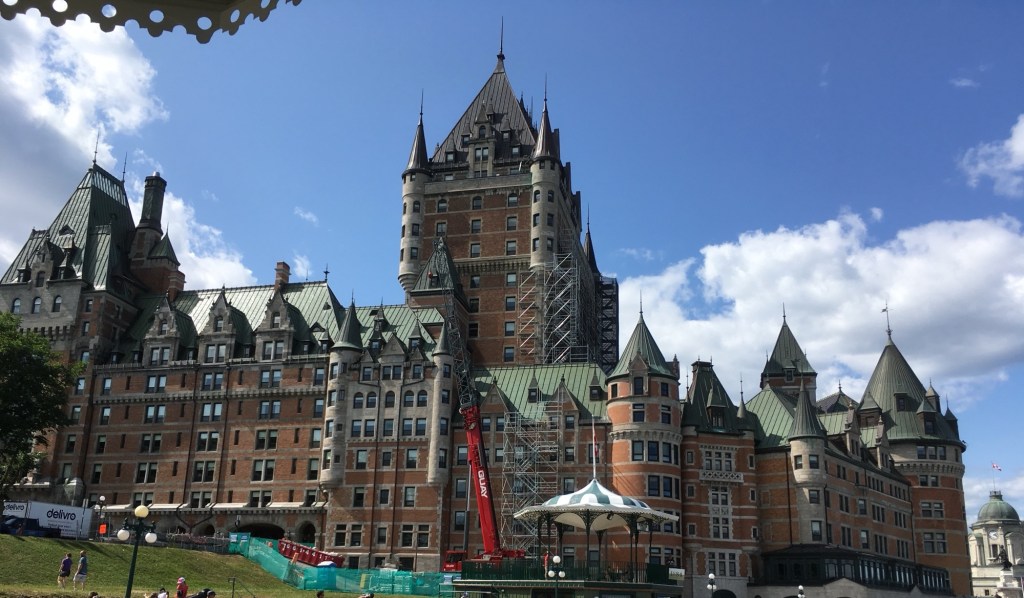
    Del casco histórico me quedé con el majestuoso Château Frontenac y con la Terrasse Dufferin, desde donde el río San Lorenzo y la ciudad de Lévis se ven perfectamente. Desde la parte baja hice una subida en un teleférico de doble cable (similar a un teleférico pero más estable) hasta la Terrass du Ferrand, desde donde tuve una vista aérea inolvidable.

    También visité el imponente edificio de la municipalidad (City Hall), cerca del Parlamento, un punto arquitectónico que destaca en la ciudad. A unos 20 minutos en auto (12 km por la Route 138 / Chemin du Roy) están las Cataratas Montmorency, de 83 m de altura, con pasarela colgante y ese teleférico de doble cable que mencionaba. Y en solo 20–30 minutos en coche podés llegar a la Île d’Orléans, una isla encantadora con bodegas, productos locales y restaurantes campestres.

    Para comer, fuimos a Aux Anciens Canadiens, que sigue funcionando como clásico restaurante donde probé fondue y raclette. Y por la noche, el mejor ambiente está en Rue Saint‑Jean, Grande Allée y Rue St‑Joseph, repletas de bares, brew-pubs y cervecerías locales.

    Québec me enamoró por su historia viva, su gastronomía y sus vistas con mezcla de lujo europeo y naturaleza canadiense. Perfecta para recorrerla a pie y disfrutarla en dos días.

                                           ⸻———————————————————

    🇬🇧 My tips for exploring Canada’s historic walled city

    Québec enchanted me from the first moment with its European feel and rich history—it’s the only walled city in North America. I strolled its ramparts, passed through the ornate Saint‑Louis Gate and Saint‑Jean Gate, and enjoyed views from Upper Town. To reach Lower Town, you can climb steep streets or take a funicular, and down there Rue Saint‑Jean pulses with restaurants, breweries, and nightlife.

    I was awed by the Château Frontenac and stood on the Terrasse Dufferin, soaking in views of the St. Lawrence River and Lévis across the water. From Lower Town, I took a double‑cable cable car (a more stable version of a regular cable car) up to the Terrass du Ferrand for panoramic vistas.

    In town, I also admired the stately City Hall next to the provincial parliament. A short 20-minute drive (12 km along Route 138 / Chemin du Roy) led me to Montmorency Falls, with its 83 m drop, suspension walkway, and that same double‑cable cable car experience. Another 20–30 minute drive took me to Île d’Orléans, an idyllic island full of wineries, local food and scenic charm.

    For dinner, I visited Aux Anciens Canadiens, still operating and famous for fondue and raclette. Later, Rue Saint‑Jean, Grande Allée and Rue St‑Joseph lit up with lively brewpubs, cocktails and locals enjoying the evening.

    Québec blends rich heritage, memorable dining, cozy streets and stunning landscapes. Two days are all you need to fall in love.

                                             ⸻——————————————————

    🇩🇪 Meine Tipps: Eine befestigte Stadt voller Charme & Geschichte

    Québec hat mich sofort verzaubert: Es ist die einzige befestigte Stadt in Nordamerika. Ich wanderte über die alten Stadtmauern, passierte die Porte Saint‑Louis und die Porte Saint‑Jean und genoss die Aussicht von der Oberstadt. Über Steinstufen oder mit einer Standseilbahn (Funiculaire) gelangt man in die Unterstadt, wo die Rue Saint‑Jean mit Cafés, Bars und lebendigem Nachtleben pulsiert.

    Das fulminante Château Frontenac war ein Highlight, genauso wie die Terrasse Dufferin, von wo man den Sankt‑Lorenz‑Strom und Lévis am anderen Ufer sieht. Von der Unterstadt bin ich mit einem Doppelkabel‑Seilbahn (stabiler als ein normales Seilbahnfahrzeug) zur Terrass du Ferrand gefahren und hatte einen grandiosen Panorama-Blick.

    In der Stadt selbst beeindruckte mich das elegante Rathaus nahe dem Provinzparlament. Nur etwa 20 Minuten (12 km über die Route 138 / Chemin du Roy) entfernt befindet sich der Montmorency-Wasserfall, 83 m hoch, mit Hängebrücke und jener Doppelkabel-Seilbahn. Und in etwa 20–30 Minuten mit dem Auto erreicht man die Île d’Orléans, eine idyllische Insel mit Weingütern, Restaurants und regionaler Atmosphäre.

    Zum Essen war ich bei Aux Anciens Canadiens – immer noch geöffnet und bekannt für Fondue und Raclette. Abends lebte die Rue Saint‑Jean, die Grande Allée und die Rue St‑Joseph mit Brauereien und Bars – perfekt zum Rausgehen mit Einheimischen.

    Québec verbindet historische Architektur, kulinarischen Genuss und entspannte Atmosphäre zu einem unvergesslichen Reiseziel – ideal für zwei Tage voller Entdeckungen.

  • 🇪🇸 Mi experiencia en Lake Louise: montañas, agua y aventura

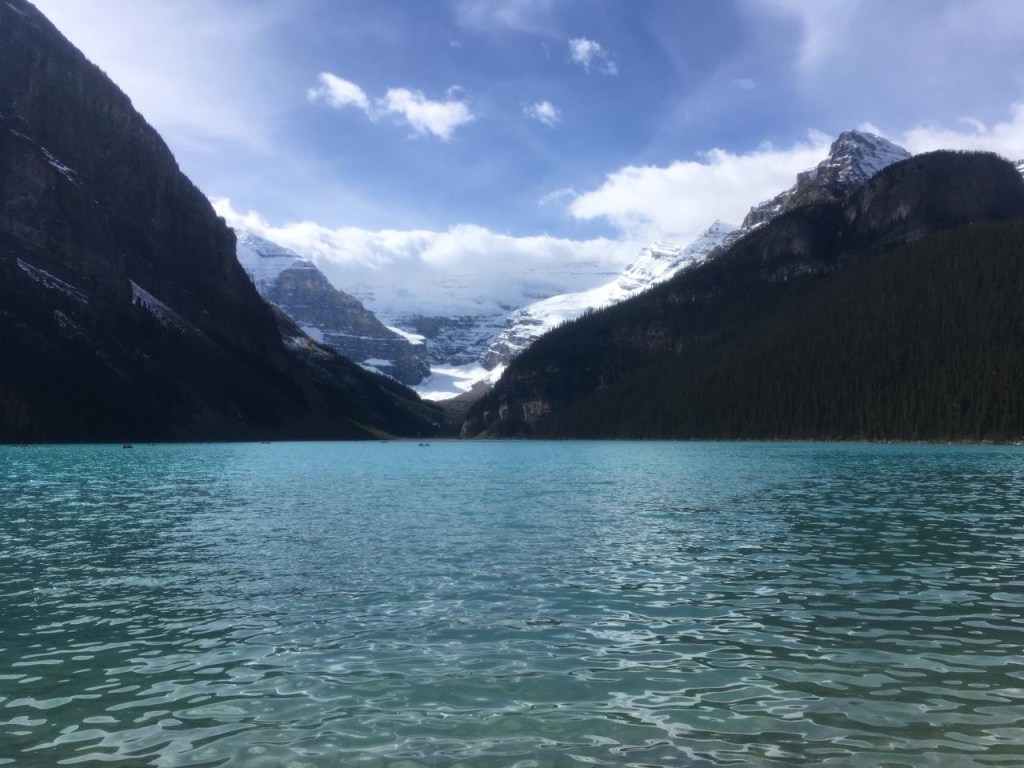
    Lake Louise me recibió con un paisaje que parecía sacado de otro planeta: un lago glacial de un azul intenso, rodeado por montañas nevadas y el majestuoso glaciar que alimenta esas aguas. Me alojé en el Fairmont Château Lake Louise, un hotel de encanto junto a la orilla, con servicio excelente y vistas directas al lago.

    Desde el hotel se pueden ver, en días claros, tanto el glaciar Victoria como, relativamente cerca, el lago Moraine, otra joya alpina. El lago está a unos 1.750 m sobre el nivel del mar, y ese color turquesa se debe al polvo de roca que proviene del derretimiento del glaciar.

    ¿Qué se puede hacer allí? Durante el verano disfruté de senderismo, kayak, canoa, bicicleta de montaña y hasta equitación. Como parte del parque nacional, no se permite ninguna embarcación motorizada, lo que mantiene todo limpio y tranquilo. En invierno, el lago se congela y hay opciones para patinar o incluso pescar en hielo.

    A pocos kilómetros se alza el Lake Louise Mountain Resort, donde durante el invierno practiqué esquí alpino, fondo y snowboard. Subí en el télécabine y en una silla elevadora hasta la cima, con un restaurante en la montaña y vistas panorámicas que se mantienen incluso en verano, cuando el resort suele abrir solo para visitantes.

    Se llega perfectamente por carretera. La ruta desde Calgary, la ciudad grande más cercana, toma aproximadamente entre 2 y 2,5 horas por la autopista Trans‑Canada, carretera amplia, cómoda y bien cuidada. También pasás por Canmore y por la pintoresca ciudad de Banff, que está más cerca y podría ser otra opción si buscás algo más urbano antes de llegar.

                   ⸻——————————————————————————

     🇬🇧 My Lake Louise journey: mountains, water & alpine adventure

    Lake Louise greeted me with a scene I’ll never forget: a glacier-fed lake shimmering blue, framed by snowy peaks and the glacier that nourishes it. I stayed at the Fairmont Château Lake Louise, a charming hotel right on the lake’s edge, offering stellar service and unbeatable views.

    From the hotel, on clear days, I could see the Victoria Glacier and even glimpse Moraine Lake not far away—another A‑list alpine spot. The lake lies at around 1,750 m elevation, and its vivid color comes from glacial rock dust carried in meltwater.

    What can you do there? In the summer, I hiked, paddled kayaks and canoes, biked and even rode horses. Motorboats are banned in the national park to keep everything pristine. In winter, the lake freezes over—perfect for ice skating or even ice fishing.

    Nearby, the Lake Louise Mountain Resort offers alpine skiing, cross‑country trails and snowboarding in winter. I took a cable car and chairlift to the summit, where there’s a mountain‑top restaurant and breathtaking views even in summer when the resort often stays open to visitors.

    I drove there easily. From Calgary, the nearest major city, the trip takes about 2 to 2.5 hours via the well‑maintained Trans‑Canada Highway. You also pass Canmore and the charming town of Banff, a closer urban stop before reaching the lake.

                ⸻———————————————————————————

    🇩🇪 Mein Lake Louise Erlebnis: Berge, Wasser & alpines Abenteuer

    Lake Louise hat mich mit einem unvergesslichen Panorama begrüßt: ein blau schimmernder Gletschersee, eingerahmt von schneebedeckten Gipfeln und dem riesigen Gletscher, der ihn speist. Ich wohnte im Fairmont Château Lake Louise, einem stilvollen Hotel direkt am See mit exzellentem Service und traumhaftem Ausblick.

    Vom Hotel aus konnte ich an klaren Tagen den Victoria-Gletscher sehen und sogar den Moraine Lake in der Nähe erahnen—ein weiteres Juwel der Rockies. Der See liegt auf etwa 1.750 m Höhe und sein intensives Türkis kommt von Gesteinsstaub, der durch das Schmelzwasser der Gletscher transportiert wird.

    Was kann man dort unternehmen? Im Sommer habe ich Wanderungen unternommen, Kajak oder Kanu gepaddelt, Mountainbike gefahren und sogar auf dem Pferd die Gegend erkundet. Motorboote sind im Nationalpark verboten – perfekt für Ruhe und Natur. Im Winter friert der See zu – ideal zum Schlittschuhlaufen oder sogar Eisfischen.

    Nur wenige Kilometer entfernt liegt das Lake Louise Mountain Resort, wo man im Winter alpinen Ski, Langlauf und Snowboard fahren kann. Ich bin mit dem Sessellift und der Gondel auf den Gipfel gefahren – dort gibt es ein Restaurant mit traumhaftem Panoramablick, und selbst im Sommer ist die Aussicht grandios.

    Die Anfahrt ist entspannt: Von Calgary, der nächsten größeren Stadt, benötigt man etwa 2 bis 2,5 Stunden über den gut ausgebauten Trans‑Canada Highway. Unterwegs kommt man durch Canmore und Banff, eine charmante Kleinstadt, die sich gut als Zwischenstopp eignet.

  • 🇪🇸 Mi recorrido por Vancouver: mar, montañas, arte y aventuras

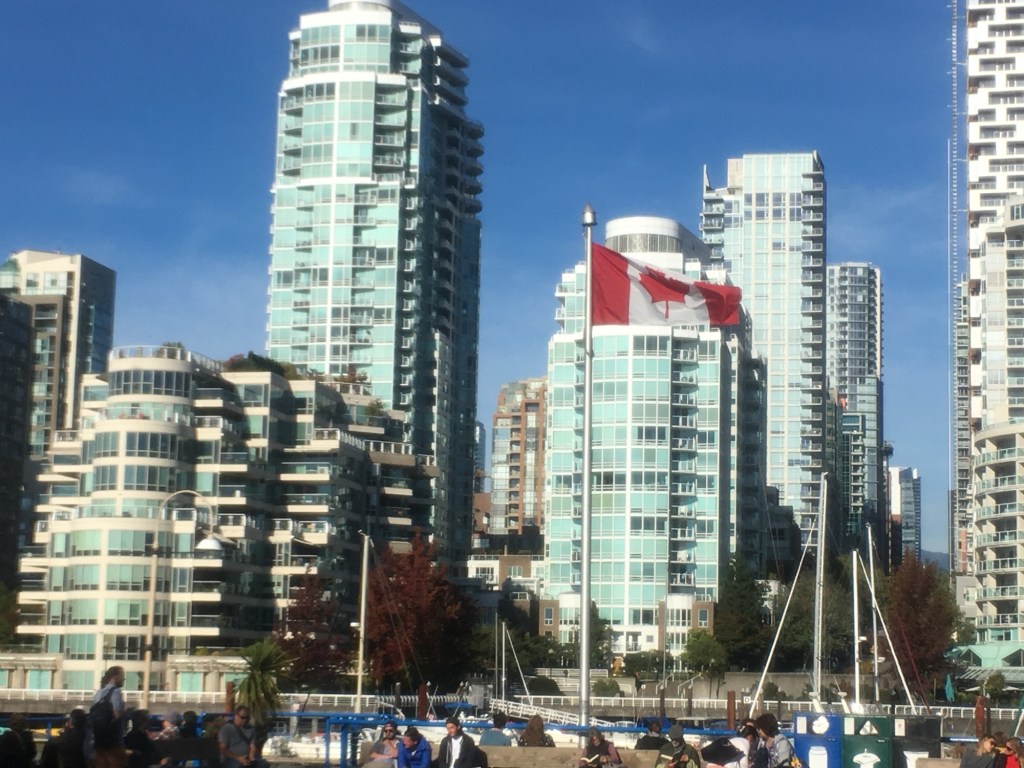
    Vancouver me recibió con los brazos abiertos: moderna, junto al mar, rodeada de naturaleza y con una vibra relajada que te atrapa desde el primer día. Está ubicada en la costa pacífica de Canadá, en la provincia de Columbia Británica, y lleva el nombre del explorador inglés George Vancouver, lo cual me pareció un lindo detalle histórico.

    Desde el primer momento se siente la calidad de vida que hay aquí. Es una ciudad limpia, segura, y muy fácil de recorrer, ya sea caminando, en bici o usando el transporte público. Uno de mis favoritos fue el SkyTrain, un tren elevado y sin conductor que conecta distintos puntos de la ciudad y es súper práctico.

    Uno de los lugares que más me gustó fue el Stanley Park, el pulmón verde de Vancouver. Es enorme y está lleno de senderos, vistas al mar y rincones mágicos. Ahí me encontré con los famosos tótems indígenas, entre ellos el Ga’akstalas Totem Pole, el Sky Chief Totem Pole y el Chief Wakas Totem Pole. Me encantó ver cómo se mezcla la naturaleza con la historia y el arte de los pueblos originarios.

    También es fascinante ver cómo los hidroaviones despegan y aterrizan sobre el agua en pleno centro, en la zona de Coal Harbour. Es todo un espectáculo, y además se pueden hacer paseos panorámicos que deben ser increíbles.

    Desde esta misma zona parte también el ferry para visitar Victoria, una ciudad encantadora que está bastante cerca. Se puede hacer una excursión de un día desde la terminal Vancouver Harbour, y vale mucho la pena.

    Otra cosa que me sorprendió fue que en Vancouver hay una especie de ciudad subterránea, con centros comerciales, pasajes y tiendas que se conectan por debajo del centro. Es ideal para los días de lluvia, que son bastante comunes, sobre todo en invierno.

    Y sí, Vancouver tiene fama de lluviosa, pero en comparación con otras ciudades de Canadá, el clima es muy suave. Nieva poco y el verano es templado, ideal para pasear y disfrutar al aire libre.

    No podía irme sin visitar Gastown, el barrio más animado de la ciudad. Es perfecto para pasear, tomar un café, cenar algo rico o salir de noche. Tiene ese estilo entre moderno y antiguo que enamora.

    Y si te gusta la aventura, hay muchísimas opciones cerca. Cruzando el Lions Gate Bridge, podés llegar hasta Grouse Mountain, donde subís en un teleférico gigante con vistas increíbles. En invierno es un centro de esquí, y en verano se pueden ver osos, hacer senderismo y disfrutar del paisaje. También está el famoso Capilano Suspension Bridge, un puente colgante rodeado de bosque que parece sacado de una película.

    Vancouver me encantó. Es de esas ciudades que tienen de todo y que se disfrutan con todos los sentidos.

                                           ⸻——————————————————

     🇬🇧 My Vancouver journey: sea, mountains, art & adventures

    Vancouver welcomed me with open arms: modern, coastal, full of nature and good vibes that make you want to stay longer than planned. It’s located on the Pacific coast of Canada, in the province of British Columbia, and named after the English explorer George Vancouver — a lovely historical touch.

    From the start, you can feel the amazing quality of life here. It’s a clean, safe city and super easy to get around — on foot, by bike or using public transit. One of my favorites was the SkyTrain, an elevated, driverless train that connects many parts of the city. So convenient!

    I absolutely loved Stanley Park, Vancouver’s green heart. It’s huge, with walking paths, ocean views, and beautiful natural spots. One of the highlights was seeing the First Nations totem poles, like the Ga’akstalas Totem Pole, the Sky Chief Totem Pole, and the Chief Wakas Totem Pole. It’s amazing how art, nature and culture blend in this park.

    A really unique thing in Vancouver is watching the seaplanes take off and land on the water right downtown, near Coal Harbour. It’s such a cool sight — and you can even take a scenic flight from there.

    From that same area, at Vancouver Harbour, you can also take a ferry to visit Victoria, a charming city that’s perfect for a day trip.

    Another thing I found fascinating is the underground city — a network of shops, passages and malls under downtown. Super useful for those rainy days, which are pretty common, especially in winter.

    Speaking of weather: yes, it rains a lot, but compared to other Canadian cities, Vancouver has a mild climate. Snow is rare, and summer is pleasantly warm — great for exploring outside.

    I also spent time in Gastown, the city’s trendiest neighborhood. It’s full of life, with cozy cafés, great restaurants and bars — ideal for dinner or a fun night out. The mix of history and modern charm makes it a must-visit.

    For more nature and adventure, I crossed the Lions Gate Bridge and headed to Grouse Mountain, where a large cable car took me to the top. In winter it’s a ski resort, and in summer you can hike, spot bears, and enjoy the views. And nearby is the iconic Capilano Suspension Bridge, a hanging bridge surrounded by forest — pure magic.

    I truly loved Vancouver. It’s a city to experience slowly, with nature, culture and adventure all in one place.

                                        ⸻———————————————————

    🇩🇪 Mein Vancouver: Meer, Berge, Kunst & Abenteuer

    Vancouver hat mich sofort begeistert: modern, am Meer, voller Natur und mit einer entspannten Atmosphäre, die einen gleich willkommen heißt. Die Stadt liegt an der Pazifikküste von Kanada, in der Provinz British Columbia, und wurde nach dem englischen Entdecker George Vancouver benannt – ein schöner historischer Funfact.

    Von Anfang an spürt man hier die hohe Lebensqualität. Die Stadt ist sauber, sicher und sehr einfach zu erkunden – zu Fuß, mit dem Rad oder mit öffentlichen Verkehrsmitteln. Besonders praktisch fand ich den SkyTrain, einen schwebenden Zug ohne Fahrer, der viele Teile der Stadt verbindet.

    Ein echtes Highlight war für mich der Stanley Park – riesig, grün und voller schöner Ecken. Dort gibt es auch die bekannten Totempfähle der First Nations, wie den Ga’akstalas Totem Pole, den Sky Chief Totem Pole und den Chief Wakas Totem Pole. Kunst, Geschichte und Natur verschmelzen hier auf beeindruckende Weise.

    Ganz besonders fand ich auch die Wasserflugzeuge, die ständig am Wasser in der Nähe von Coal Harbour landen und starten. Es ist faszinierend zuzuschauen – und man kann sogar Rundflüge buchen.

    Direkt von dort, vom Vancouver Harbour, kann man auch eine Fähre nach Victoria nehmen – perfekt für einen Tagesausflug in die charmante Nachbarstadt.

    Was ich auch spannend fand: Unter der Innenstadt gibt es eine Art unterirdische Stadt, mit Läden, Passagen und Einkaufszentren – ideal, wenn es regnet, was im Winter häufiger vorkommt.

    Und ja, Vancouver ist bekannt für Regen, aber das Klima ist viel milder als in anderen kanadischen Städten. Schnee ist selten, und im Sommer ist es angenehm warm – perfekt zum Draußensein.

    Ich war auch in Gastown unterwegs, dem angesagtesten Viertel der Stadt. Dort gibt es tolle Cafés, Restaurants und Bars – perfekt für einen entspannten Abend oder ein schönes Essen. Der Mix aus Alt und Neu macht den besonderen Charme des Viertels aus.

    Wenn du Natur und Abenteuer suchst, solltest du unbedingt den Lions Gate Bridge überqueren und zum Grouse Mountain fahren. Dort bringt dich eine große Seilbahn auf den Gipfel. Im Winter ist es ein Skigebiet, im Sommer gibt es Wanderwege, Tiere wie Bären und fantastische Ausblicke. Ganz in der Nähe findest du auch die berühmte Capilano Suspension Bridge, eine Hängebrücke mitten im Wald – einfach magisch.

    Vancouver hat mich begeistert. Eine Stadt voller Leben, Natur und Abenteuer – ideal für Reisende wie mich.

Diseña un sitio como este con WordPress.com
Comenzar